Saturday, March 28, 2015

Boxes of Delight

Red telephone boxes are as much a part of the national landscape, mental and physical, as power pylons or steeples, or at least they used to be.  They used to be a ubiquitous and pleasing feature of cities, towns, villages, hamlets, crossroads and random stretches of ‘road’ in places so rural you’d wonder that Christianity had reached that far, never mind telephony.
Originating in an age when it was far from the norm to have a telephone in the home unless your surname was ‘Bell’, or you were a character in a costume drama, the original function of these architectural and technological delights was to allow people to telephone other people.  But barely had the bright red paint dried before the role of these local landmarks evolved.
The first step in the evolution of the telephone box was its emergence as a dramatic character.  A person goes into a telephone box and rings another person.  So far, so normal.  But an empty telephone box with a ringing ‘phone?  That’s the start of the sort of plot only rivalled by somebody stepping off on to a deserted railway platform to be informed by a ‘suitably’ ‘characterful’ ‘station master’ that no train has stopped here for twenty years.
As more and more homes got more and more ‘phones, the telephone box moved from being the place you went to to make a telephone call to being the place that you went to to make a private telephone call (you could tell an adulterer in times past because they always had lots of loose change), ironic considering that they were constructed out of steel…and glass, and illuminated. 
As technology advanced, telephone boxes took on roles unconnected with calls, booty or otherwise.  The normal place for displaying business cards is, of course, the newsagents’ window, but thanks to the advancement in printing technology and in particular to business card printing machines being made available in service stations and other haunts of lorry drivers and travelling salesmen, and hence by extension to their service sector, prozzers were able to create professional looking business cards cheaply and in volume, and distribute them around telephone boxes.  Telephone boxes took on something of a festive atmosphere, if your idea of festive is a business-card blizzard of smutty invitations, as the interiors of telephone boxes began to look a little like top shelves, festooned with graphic graphics.  Accordingly, a trip to a red call box could resemble a visit to a red light district.
These temples of communication also provided other sorts of relief in times of extremis.  Many a chap, decent chaps, honest chaps, the sort of chap who would shudder to relieve themselves against a tree, well, an oak, well, a listed oak, would of an evening be profoundly glad to happen across a telephone box to answer not a ringing handset but the call of nature.
There was, of course, a protocol to be observed in such cases.  Firstly, one always avoided any tramp that might have taken up residence overnight in a traditional telephone box.  (BT (Bastard Telecom) modified the design of telephone boxes in the 80s, changing them into telephone ‘kiosks’ in a move which perfectly encapsulated a shift from a public service GPO monument to humanity that would serve not only as a tool of communication but shelter from the storm, to a profit-driven monster, putting into service a plexiglazz monstrosity that had a gap all the way around the bottom, presumably to allow the elements to penetrate and so discourage overnight guests.  Or possibly to provide adequate drainage.)  The protocols, famously illustrated by a small sign illustrated by none other than Quinten Blake that used to delight, inform and repulse in equal measure, were that if one was relieving oneself in a telephone box, one always faced away from any observer(s), and always held the handset firmly and confidently gripped in the unemployed hand.  Just a chap, making a call, and if you happen to notice that a chap has his chap (or indeed his penis) in his other hand, then any shocked observer could take comfort in the certainty that urinating is just about the least offensive thing that the occupant of the telephone box can be doing in such a pose.
The telephone box has so often doubled up as a crisis WC that rumour has it that in the days when telephone boxes had telephone directories in them (a forerunner of today’s telephone box libraries, though exclusively stocked with books with lots of characters and not much plot), serious thought was given to printing the directories on soft paper, possible perforated.
The rise in the increase of mobile ‘phone ownership coincided with a decline in courtesy to others and of inhibitions about sharing private details with total strangers.  People making a telephone call no longer sought a soundproof booth but instead favoured busy public transport or hitherto quiet and peaceful spots to make their telephone calls.
So it was that the telephone box fell into disuse.
As a telephone box.
They ceased making money because even though nobody was using them, they still had to be cleaned and occasionally de-tramped.  Slowly telephone boxes started to disappear, airbrushed out of the landscape.  (Sadly, not everyone thought to check to see if mobile ‘phone coverage extended to all the sites now marked not with a proud, glittering. Illuminated, slightly pee-smelling red box, but with a square of concrete.)
Of course, if there were any justice in the world, a succession of small plaques would be sunk into the otherwise anonymous concrete squares that, like the footsteps of telephony prehysteria, now dot the land.  A small plaque to commemorate a huge event, for instance that such-and-such a person ‘phoned their mother and father to inform them they had become grandparents from this site in 1965; that Debbi Broke Up With Darren using this ‘phone box in 1984, that in the same year, Darren confirmed to Debbi’s best friend Mandy that Debbi was a right slag anyway, and did Mandy want to go to out with him? And that in 1993, a profoundly relieved Jeff profoundly relieved himself on this very site.
The ‘problem’ with traditional red telephone boxes is that they have more individual panes of glass in them than the average cathedral, and so are devilish hard to clean, even if not be-tramped.  Naturally, as soon as Bloody Terrible stopped cleansing telephone receivers and started cleansing the landscape of character, the nation revolted.  Anyone who produced rural postcards of a sheep standing by a dry stone wall next to a red telephone box realised that sheep and stone alone just don’t do it.  The middle class mobilised.  In 4x4s.
As a result, many villages have successfully held on to their red telephone boxes (usually the same places that have held on to village greens).  Of course, they may not have managed to hold on to their indigenous population or village youth that has been priced out of the place by second home buyers, but at least the centre of the village still has its crimson totem to modernity.
Now though, more than ever, we know that telephone boxes can fulfil duel functions.
Telephone boxes have, famously, become village libraries, a phenomenon that started in 1994 when a lady in Masham left three copies of Catherine Cookson on a shelf by mistake, started a national trend, and has been too embarrassed to ask for them back since.
And there are yet more modern social uses.  Because it’s not just the internet that’s slow in rural areas. Ambulance response times being what they are in the countryside, there’s been a couple of reactions.  The first is a very practical approach to dealing with any accident involving threshing machinery.  Following the screams and panicked shut down, people pack anything still twitching in frozen peas and then hey ho for the nearest hospital.  Everyone then gathers at the local pub to wait for an update on successful re-attachment.  The first time anyone mentions ‘micro-surgery’ it is the law that somebody must say ‘was it his cock that got cut off’?  Followed by ‘I don’t make the rules’.
The second reaction is the most modern incarnation.  Village defibrillator.
On the face of it, this is a great idea.  With more and more people having more and more unrealistic expectations of their ability to do stuff, like running marathons, staying upright on a bar stool or enduring another fucking day on public transport, it’s a wonder that everyone doesn’t carry around their own defibrillator, like an evacuee carrying around a box on a piece of string that he or she imagines contains a gas mask bust in fact only contains an apologetic note from their mum explaining that their mask has in fact been sold for gin.
Defibrillators are appearing in more and more places.  Like pubs.  And surely that can’t be healthy.  Naturally, if a beloved boozer keels over and pegs it half way down a pint of what the landlord laughingly refers to as his best, then this will lead not just to blokes reading about the demise thinking ‘that’s the way to go’, or indeed the regulars all doing the sort of mental calculation that would boggle Turing to determine when would be the decent time to take up residence on Fatty’s recently vacated bar stool.  It leads to a few charity nights and the proud purchase of a defibrillator for the pub.  Of course, it’s only a short jolt to think that once the locals work out that the thing is rechargeable, they can incorporate it into their evening with, in descending order of idiocy, options including: 1) answering pub quiz questions after having paddles applied to both temples and being ‘zapped’, 2) playing ‘how high can you go’ on the voltage charge, noting that some wag has written ‘Frankenstein’ on one of the settings; 3) playing ‘Jason Statham’ by trying to improvise an anti-bad guy weapon and propel other people across the room by paddling their nipples with electricity; 4) playing doctor by bellowing ‘clear’ and then zapping an unsuspecting drinker in the arse and, of course, the winner, 5) the ‘electric boogie’: suck a lime, tequila shot, lick salt off of a live paddle.
But the latest incarnation of the telephone box as a home for the village defibrillator is something else.  Especially when you consider that only people trained in the use of the defibrillator may use it.  That’s probably a good thing, the last thing you need to see is some idiot spitting on some paddles for improved connectivity and electrocuting himself.
However.  Village life is interesting.  It is easy to start an argument (I refuse to use the term feud, we’re not, as Ross Kemp remarked in ‘Ultimate Force’, Americans) in an English village.  Defibrillators are expensive kit, so presumably only accessed by trained community members, these are the people you do not want to piss off, especially if you are lardy.  So.  It’s important to keep those keymasters trained to use the defibrillator and trusted with a key to its cabinet, on side.  The last thing you need to do if you like your beer, fags and lining your arteries with cheese is to forget to return those pinking shears you borrowed off the stuck up bloke who lives in ‘the Old Rectory’ and which you secretly used to trim your toenails.
It’s right that what was once an electronically powered beating heart of the village should once again be an electronically powered beating heart restarter of the village.
As to what’s next for the village telephone box?  It’s either going to be the recharging point, take off and landing pad for the village delivery drone, or home to the village three dee printer that will print your grocery order for you using protein goo and dye.
And, of course, it’s the perfect shape to operate as the village teleport kiosk once that technology is perfected, it’s even got the dial mechanism to enter the co-ordinates.


Labels: , , , , , , , , , , , , , , ,

Wednesday, October 08, 2014

Write on beer

Famously, Laurie Lee, one of the nation’s most beloved novelists, wrote ‘on wine’.  Whether or not he was ever drunk in charge of a typewriter is unclear but one has to entertain the possibility that, as a poet, he typed without due care and attention.  He did his writing in the Greek Islands, presumably because in the days before bargain booze, affordable New World wines or even Blue Nun, this was the only way he could become sufficiently inebriated to welcome the Muse should she come to visit.  Also, proximity to Mt Parnassus may have helped.
Rock stars smoke, inject, inhale and presumably occasionally insert for inspiration.  Writers drink.  Christ alone knows why, as excessive booze normally leads to feelings of alienation from the world and a profound sense of being under-appreciated and misunderstood, all of which is achievable through the simple act of publishing a slim volume of verse.  Alcohol also inhibits early morning creativity, and certain writers famously were at their creative peak at first light.  Presumably this meant they could post the latest chapter of their novel off to their publishers at eleven in the morning on their way to the pub.
However, in the spirit of enquiry G&P is embarking on a five-part special to explore the effects of various types of alcohol on writing, beyond those of not being able to remember that fantastic idea for a novel you had last night (something about a boy wizard?) just before you passed out, or not being able to decipher the notes scrawled on a beermat that could be a poem, or somebody’s e mail address.
We continue with…beer.
I am writing this in the pub.  It’s actually called ‘The Red Lion’, which might give an insight into the sort of place it is, at three o’clock on a weekday afternoon, which might give you an indication of my commitment to my research.  Pubs off hours are very different to pubs when civilians (those who drink at Christmas/anyone who orders a Guinness last when getting a round in) frequent them.  They are communities.  The barmaid (who doesn’t know me, I hasten to add, I’m not rich enough to make a habit of this) asked me how I was?  OK, this may be barcraft 101 but it’s also a loaded question.  I’m in a pub at three in the afternoon, chances are things may not be going well (I will need many drinks) or I am celebrating something (many, many drinks, you’re not found ‘not guilty’ every day).  Actually, I see why she asked.
It’s also got a priests hole, and once upon a time there would have been a humorous sign, but Yewtree has fucked that for us as well.
The drink of choice is Stella Artois.  If ever there was an advertising Big Lie, Stella is a prime example of it.  Marketed as posh lager, it even comes, Belgian style, served in its own glass, a goblet style thing.  Anyone who is familiar with this beer knows that it should indeed be served in its own drinking vessel, but that this should be a plastic pint glass.  Stella, you see, has a reputation for turning people into aggressive nutters.
So what should one write on Stella?  Well, I am typing one handed while I make notes for a series of books that will be written under the pen-name of ‘Jack Stroud’ and will follow the fortunes of the males of the ‘Fret’ family as they fight in every war since..,let’s see, yes, the English Civil War.  Titles so far include ‘Royal Fret’, ‘Fret in Tartan’, ‘Fret at the Front’, ‘Frontline Fret’, ‘Fret and the Ruby’, ‘Fret Pulls It Off’, ‘Fret of the Artic’, ‘Fret of the Antarctic’, ‘Fret of the Falklands’, ‘Frantic Fret’, ‘The Fret Files’ (short stories) and, of course, ‘Fret with Wings’ (possibly featuring a female Fret).
Obviously, these will take off (especially the last one).  At that point, I employ an army of ghost writers and project the story of the Fret family backwards, as the Fret family take on the French, the Dutch, the Romans and the Vikings.
A movie adaptation you say?  Ha!  Remember, I’ve been drinking.  Stick your movie option up your arse, along with your assertion that this entire idea is predicated on the plot line from the Forrest Gump movie that every male in Lieutenant Dan’s family line had fought and died in some conflict.
I’m thinking…cut out and dress doll line.  Right?  Right?  Remember those 2D dolls you used to get in the back of magazines, with cut out clothes and tabs and so on?  Well, how about a Fret…but with loads of uniforms, it would be a cross between a really crap and outdated effort to keep kids quiet and a cutting edge publishing phenomenon and, here’s the kicker, it would be fucking useless on Kindle, unless Kindle comes with a printer.
Also, I’d market the cut out and keep doll and costumes with a colouring book and crayons and bundle it with the latest book in the Fret series, subtitled ‘Last of the Frets’ but titled in Great Britain ‘Fucking Fret!’ and in the US or any other country that doesn’t speak English properly ‘Fret’s annoyed’.  The plot is, er, just like the other plots, Fret has a hard time in some conflict, considers leaving, thinks on his family, rediscovers his courage and fucks somebody over with a rusty bayonet that belonged to his grandfather, or a pottery shard that a distant relative left buried in the sand, or in the side of an enemy also buried in the sand…
…details are unimportant.  What’s important is that the story involves Fret, this Fret, finding a diary from a Fret, that Fret, who fought in some previous war that, and here we go, not only gives him the courage to fight on, but actually reveals a hidden path to outflank the enemy.
Fuckin’ YEA!  This is going to be the first colouring book ever to win a BAFTA.  Did I type BAFTA, I mean Booker.  Fuck it, they need to invent a new category of BAFTA, or merge them, the first BOOFTA winner is, me!
So.  That’s beer then.  I suspect bitter might, paradoxically, inspire one to write something bucolic, possibly involving a bicycle and a clergyman, maybe even a crime thriller. But lager?  Lager is a war story in a glass.  Goblet.  Plastic beaker.  Whatever.

Labels: , , , , , , , , , ,

Saturday, June 07, 2014

Book Clubs


How ironic that what is for most a solitary occupation should give rise to social occasions in the form of the book club.
For most people, reading is a solitary occupation.  There are exceptions.  The bed time story between parent and child, the story time in school or library between CRB checked adult and children, or the public reading between author and crowd he wishes were younger, hipper and more attractive or she wishes were not so bloody condescending to women writers.
Of course there is always that moment when you see somebody else reading the same book as you on public transport and share either a nod, a knowing glance, or bodily fluids, depending on just how racy the book in question is., another delightful social convention the Kindle is killing off until they come up with one with a back screen that shows the cover of whatever you’re reading.
Certain books are exempt from the ‘Oh, you’re reading that too?’ moment.  These are Harry Potter books and anything by John Grisham.  The same goes for any book duplicated poolside or on the beach.  Any book from the Song of Ice and Fire cycle is actually fair game, especially if the other person is behind you in their reading, allowing you to sharply draw breath when they mention their favourite character.
There are, of course, certain books that essentially are a public service announcement.  Don’t strike up a conversation with any woman reading ’50 shades of grey’ unless you really enjoy hearing about unhappy relationships.  If you see anyone reading ‘Catcher in the Rye’ they may not be a psycho, but can you really take that chance?  Oddly, anyone reading ‘American Psycho’ is probably normal, but would rather read than talk to you so is best left alone.
Where we read is in our own space, in our own head.  If we want company, we do the voices of the characters in our head while we read.  Mostly, we don’t.
On the one hand then, the very existence of book clubs is surprising.  Everyone actually getting organised enough to read the same book at the same time?  Amazing.  What’s more, that this should happen in England?  A place where usually nobody ventures a critical opinion about anything, unless it’s a tut!  Newspaper review supplements should change their star ratings to a tut/star rating system.  If a book is OK, it gets a star, if it’s amazing, it gets five stars.  But if it’s awful, it gets a tut, and if it’s really awful, it gets five tuts.
On the other hand, anyone who finishes a book immediately wants to tell people about it.  It doesn’t matter if it’s a novel, a travelogue or ‘Amazing Buns In Just Five Weeks’, give somebody a glass of white wine and a voulevont and they will spit damp crumbs at you in their enthusiasm to communicate just how good the latest Patricia Cornwall is.
Haven’t read it?
Doesn’t matter, it’s like a fucking abridged audiobook, you’ll get the potted plot in three minutes, followed by thirty minutes of just how relevant the book was to the reader.  Bonus material can include, but is not limited to, who should play what roles in any movie adaptation.
The book club formalises this process.  If it’s a crap club, then everyone talks books for five minutes before talking about soft furnishings.  If it’s a good one, then everyone maintains a veneer of respectability for about five minutes before acrimony occurs.
Because the English, when forced to read the same book, can have wildly different opinions, and that’s what makes book club so much fun.  That and alcohol (my book club meets in a pub).
And it is a great social occasion.  You get to try out new skills, like back-pedalling from the brink of social mortification after you open with ‘it was shit and anyone who liked it is a peado’, only to find yourself in a minority and secretly starting to wonder if the rest of the group are just a little bit thick, or peados.
No book club in your area?  Start one.  You get to choose the first book!  I recommend ‘American Psycho’.

Labels: , , , , ,

Wednesday, April 30, 2014

What the hell...is 'water cooler television'?

Micro docs (not, as the phrase might imply, a reference to the number of health care professionals likely to be left working in the NHS after Capita get a hold of the health service, nor dwarf GPs, but an entirely new concept in educating the attentionally spanned impoverished and the subject of last Saturday’s blog post) are, possibly, a breakthrough in water-cooler friendly television. 
Whatever that is.
Ten minutes on the internet turns up LOADS of porn, but also that ‘water cooler television is an outdated cultural reference to television that people talk about when they gather around the water cooler, rather than television featuring water coolers nor television programming for water coolers.  Although, if you want the sort of people who spend a lot of time hanging around the water cooler discussing your programming, then lots of programmes about water coolers, including a soap set in the room or corner of the office where the water cooler is located, is not a bad idea and, for those who are really frequent visitors to the water cooler, a sister channel about toilets.
Thinking about it for a couple of seconds, which is a couple of seconds too long, who the fuck wants water cooler loiterers talking about their programmes anyway?  If your aspiration is to have your body of work watched and then criticised by the sort of people who use hydration as an excuse to hang around a large bottle of H2O in the hope the pretty girl on work experience has to come by to change the paper in the bottom draw of the nearby photocopier (because you arrived early to empty the tray to engineer such a visit), then aim higher. 
What does success look like? 
It looks like a BAFTA award.
But also, well, on a commercial channel it looks like people watching your programme, then talking about it down the pub, then coming home drunk and instead of playing on-line poker until they have to put their kidneys on eBay to cover their debts going on line with a credit card and purchasing whatever crap was advertised during the commercial breaks in your programme.  In other words, 50 Malibu Barbie’s arriving at the home of a man with no idea why the fuck he ordered them, delivered by a man who is already thinking ‘peado’. 
On the BBC, success looks like people watching your programme, then talking about it down the pub, then coming home drunk and instead of playing on-line poker until they have to put their kidneys on eBay to cover their debts going on line with a credit card and purchasing the same jacket your lead character was wearing in a crucial scene after visiting the sort of web site that gives that sort of information.  In other words, a North Face parka arriving at the home of a man with no idea why the fuck he ordered it, in July, but, as it’s a North face parka, is really pleased and practically has to wrestle it away from delivery guy.
Fuck the water cooler tribe, they don’t even pay for their drink, we want the pub people.
So, what do people talk about down the pub.  Teevee obviously and, because the pub is the parliament of the people and hence a place where you want to always appear smarter than everyone else, you talk about the documentary you saw last night on some diverting subject, rather than the afternoon you spent watching back-to-back Ballamorys in your pants working your way through a Pot Noodle three for the price of two pack you bought on a whim that was supposed to last you a month.
Hence the need for micro docs.  You can’t get cooler telly.

Labels: , , , , , ,

Saturday, April 26, 2014

Micro Docs

Documentaries.  Here’s the thing…who’s got an hour to invest in a, no doubt worthy, show about Jupiter’s moons, French caves or weird foreign shit when all you really need is the bit that makes you almost summon your wife from doing the washing-up to ‘see this shit!’?
And let’s be clear about what constitutes a documentary.  A programme about nature, the planet, other planets, how hard life was back when things were black and white and anything to do with caves are fine.  War documentaries are OK, but only if the subject of that documentary is anything other than Hitler Was Bad.  Any series featuring a profession and a recurring character is not. a.  fucking.  documentary.
In short, you want to 1: Reveal astonishing fact about bees/Jupiter/Clouds.  2: Have somebody snort ‘No fucking way’ when you tell them about it down the pub.  3: state ‘it’s true’.  Follow up fact, slam dunk and mine’s a pint of Large and a packet of pork scratching please Neville.
The thing about documentary makers is that they spend a looooooooooong time, and suffer quite a bit of discomfort, making their programme.  If it’s a nature documentary, it’s all about sitting freezing your ass off on a remote hillside trying to get a picture of an animal that, let’s face it, probably doesn’t even taste good so why is it so rare anyway? before trekking seventeen hours to the nearest village with an internet café, firing up something with a Pentium 486 and finding out, through a heavily censored Facebook, that your girlfriend has updated her status not to ‘single’ which you were worried about during this period of separation, but ‘married’, to a bloke that looks a lot like your brother.  Then, once you have your hundreds of hours of footage, you have to sit alone in a dark room for weeks in order to edit it down to a manageable 60 minutes, which these days includes ten minutes of ‘how we made this’.  By the way, that shot of you having a breakdown in that internet café in Nepal…BAFTA love shit like that.
The solution; micro-docs.  If John Lewis can, as they did last Christmas, essentially put together an advert that in 30 seconds had the same emotional effect on the weak-minded as other seasonal animated offerings (Snowman and Snowdog excepted, they are still the supreme Christmas offerings.  As is the ‘Doctor Who’ episode ‘The Christmas Bride’.  Or any of the Robert Powell M.R. James ghost stories for Christmas), then all the relevant information, or, at least, enough for you to wing it in the pub, can surely be achieved in a 45 second long documentary.  Plus 15 seconds of how we made it.
Example.  Volcanoes.  Everybody knows volcano basics.  If they don’t, what in the name of a green fuck are you doing talking to somebody who is so culturally impoverished that they have not seen ‘Dante’s Peak’.  So, in 45 seconds, the documentary would explain the pyroclastic flow.  The 15 seconds ‘how we made this’ would be the film crew, in a Land Rover, going 80 mph (improbable for a Land Rover I know but it’s downhill with a superheated cloud of death also propelling the vehicle) screaming ‘Shiiiiiiiiiiiiiiiiiiiiiittttttttttttttttttttttt!’ apart from one guy at the back who is so terrified he is simply sobbing.  Nor THAT I’d watch.
And the great thing is, you can have loads of micro-documentaries about an over-arching subject.  Vents, and people who live near FUCKING VOLCANOES are just two subjects I’d like to see covered in 45 seconds, the first because hey, geology is always fascinating, and because it would have to feature the public and 45 seconds is not long enough for anyone to become a ‘break out star’.
Of course, you have to be a bit sensitive, and avoid the trinity of subjects that should never be ‘taken lightly’, Yewtree, Titanic, Hitler.  Oddly enough, FGM is the perfect fit for a micro doc as not only is 45 seconds the upper limits of the ‘oh Christ turn over!’ threshold on that subject, but if you haven’t got the message about FGM in 45 seconds, maybe somebody should be making a documentary about you.

Labels: , , , , ,

Tuesday, January 21, 2014

Services with a smile


A pint of beer.  Lovely.  This is best enjoyed after briskly walking the dogs or engaging in some rewarding manual labour prior to slumping in a chair and sighing.

Whetherspoons, the pub chain famous for selling very cheap beer and for being open for breakfast so that patrons can enjoy a croissant with their cider, today opened their first pub on a motorway service station.

This is, depending on your point of view, a sound commercial decision and a move that will allow weary travellers to have a decent meal at an affordable price prior to resuming their journey refreshed and alert, or madness.  In particular, motorway madness.  And that’s the worst type of madness.  Apart from madness involving power tools.  Or genocide.

Wheatherspoon’s argument for having a pub in a service station – a place where drivers’ pee and guzzle coffee prior to resuming a journey on a very busy road full of speeding traffic – is that this is a place where a motorist can stop and have something to eat and a tea or a coffee or a wide variety of drinks or, if they are drinking alcohol, a sensible amount.

So what’s a sensible amount?  I’ve been on the M40.  A sensible amount of alcohol to drink whilst driving on it is none at all.  A sensible amount to drink when you arrive home after driving on it is a fucking shedload.

Even if the driver isn’t boozing, is a pub breakfast or lunch, which can involve sausage, beans, eggs, double chips and an extra sausage, really the best thing to eat prior to undertaking a motorway journey?  Isn’t the best meal to drive on three amphetamine tablets rattling around in one of those wee paper cup things and a strong coffee?

Those who oppose the opening of the pub argue that THIS IS A PUB IN A SERVICE STATION!

I can’t actually recall the name of the pub, but surely this is ripe territory for a competition.  ‘The Drivers’ Arms’, with the pub sign being a couple of hands on a steering wheel?  ‘The Coach and Party’?

Possibly this is a throwback to the romantic early days of motoring, when roadside coaching inns enjoyed a brief revival as roadhouses, offering beer, fags and hearty fare to weary motorists before all those pesky laws about drink driving or social conventions about smoking a pipe in a car full of infants came into being.  Our roads though, are somewhat different now.

I’m a huge fan of pubs, and I’ve got nothing in particular against the M40, but I’m not sure that a pub in a motorways service station is a great idea.  There are many things that one can usefully do at a motorway service station, but ‘tarry’ is not one of them.

Which makes me wonder about a pub patronised by a transient community.  Or will it be?  Who will be the regulars at the Drivers Arms?  I’m romantic enough to hope that this will be a destination location for those in the locality who fancy a quick drink in convivial company and are willing to toil across the no-mans land, and possibly six lanes of speeding traffic, that surround these places for a pint and some lively conversation.  Possibly these will be the same people who when faced with the question ‘where shall we eat tonight’, don’t hesitate to respond ‘the KFC at the service station…we can get a drink at the pub first’.

Labels: , , , ,

Tuesday, May 22, 2012

Postcard from Norfolk - A fistfull of chips

A trip out to Sheringham, via a stop in Salthouse for lunch at the Dun Cow. It’s the done thing. Sitting in the courtyard in the sunshine there was a moment of tension and trepidation introduced to this otherwise relaxed scene. We had ordered sandwiches of various types, which come with ‘a handful’ of chips. There was some conversation about just what ‘a handful’ constituted. We made the effort to keep the banter light but you could tell there was an edge to it. The expectation was that it would be the handful of the sort of chap who can palm a basketball and not, for instance, the handful of somebody just out the womb. We wanted a large hand, so that we wouldn’t have to beat the landlord to death with an example of same in order to drive the lesson home.

As it turned out, chef must either be a big bloke or have overheard our conversation, or got our note, because the handful of chips that arrived was just right.

Also lunching at the Dun Cow were birdwatchers. We had our suspicions of their pastime based on hats, beards, field glasses, vest of many pockets and stout boots but what put it beyond doubt was when they were able to correct our woeful misidentification of a little fellow pearched on the chimney, tweeting. They did very well to hide what must have been great irritation at our ham fisted attempts to Name That Bird. I think I was closest with ‘goat’.

Sheringham is the home to my new favourite bookshop. I’ve never been in to it before, always preferring to give the Brazen head in Burnham Market my custom but this time I wandered in and yes, it was because there was a sign in the window about how this was a Dickens of a good shop and potential customers were right to have great expectations of it. Who could resist?


Not me. Once over the threshold, the place is a delight. It’s like the illustration of some magical realist children’s book, a cave of books, a building made out of books. Every wall is lined, there are nooks, there are crannies, and they are all filled with books. It’s like the home of a literary hoarder and probably what my front room is going to look like in a few years if I don’t stop buying books.


As well as having a diverse and fascinating stock, the place is curated with care and humour, for instance the misery lit is opposite the children’s section. Displayed face on instead of spine on, one sees that the cover design of misery lit paperbacks are generic, there’s a title and author’s name in somber font and colour, then a black and white or sepia picture of a child looking either concerned or constipated depending on how much the publishing house was able to spring for a decent stock photograph. And they all have the same titles ‘No daddy no’, ‘Please stop mummy’, ‘Cut that out uncle Eric’, ‘Grandad you filthy fucker you could at least have washed it first’, that sort of thing.

Obviously, child cruelty must be stopped, if only to make sure no more of these bloody things are printed.

I’m also more convinced than ever that the Kindle must also be stopped, or second hand books will cease to exist. That means that in future years adults will be denied the pleasure of rediscovering ‘First term at Chalet School’, ‘Second term at Chalet School’, ‘Detention at Chalet School’, ‘In the showers at Chalet School’ and so on.

Labels: , , , , , , , ,

Saturday, April 21, 2012

A night out!

The pub. To some, a place of refuge, like a blokes' community centre, to others, a gateway to a world where worries can be temporarily suspended in a fuzzy solution of alcohol and snacks, to others, simply a source of lager. What could possibly be better than a pub? Obviously, a selection of pubs, all experienced in one evening.

A pub crawl provides several vital functions for the drinker. Firstly, it shows that one is not just heading for the boozer at as early an hour as social convention will permit and drinking until all your higher brain functions are numb enough to allow you to discuss the merits of the latest season of 'Top Gear' without irony and with every sign of enjoyment, it also reduces the amount one drinks in an evening, principally because even in this age of GPS, Google Maps, smartphones and route planners, the fourth pub is always 'around here somewhere', that is, one street to the left or right of the one you thought it was in. Finally, it provides one with a trajectory for the evening, allowing one to compare notes on beer, atmosphere and seating arrangements. The unspoken rule is never to admit that the place you started off in was the best place you visited all evening and the smart thing to do would have been simply to dig in there.

And what better place to start than a traditional boozah. And how can you tell it's traditional, because it has some sort of stuffed animal in it, or at least a portion of a stuffed animal, that's how. There may well be pubs where it's considered bad form to have a stuffed animal somewhere in the bar, or even worse form to have the stuffed animal dressed up and, for instance, playing a musical instrument or undertaking a trade or pastime, for instance being posed as a cobbler, or Morris dancer, but as a rule of thumb the beer is going to be better in a pub with stuffed fox head in it, especially if that fox head has a stuffed bird dangling from its jaws.


This is a reminder, should anyone object, that foxes are vermin and the numbers need to be kept down, and the most efficient way of doing that is to get around thirty members of the upper classes to chase them across she countryside for four hours and then set a pack of hounds on them. Simply putting down poisoned bait is not considered environmentally sound.

History does not record how the stuffed bird met its end. Possibly mistakenly pecking at poisoned bait.

An evening of drinking is generally a great idea in principle, but in practice is likely to see you keel over at a certain point unless you have something to eat. Drinking tacticians may already have taken care of this by having the traditional finger of kit-kat before heading out, but in case you have not had an opportunity to line the stomach, this is she time to take advantage of bar snacks.

Ideally, this should be something filling and greasy. This is why pork scratchings are the ideal pub snack. Salty, savoury, tasty and packed with all the starchy fatty nutrients that will not only give you the energy to keep going until closing time, but will give you something to blame morning after quese upon.


Do not,whatever you do and no matter how drunk you get, ever have a pickled egg. Pickled eggs float in their enormous jar at the end of the bar like a horror in a mad scientist's laboratory floating in formaldehyde and will be about as good for you when you eat them. As a general rule, if anything you are doing in a pub draws an inquisitive crowd, stop doing it. This especially applies to eating a pickled egg.

Finally, at some point you are going to have to visit the pub loo. Once you've finished, acceptable methods of drying hands are; back of jeans, paper towel. Never ever use the communal towel. The last bloke to wipe his paws on it might have a job in a germ warfare lab, or KFC.

Labels: , , ,

Wednesday, April 04, 2012

Postcard from Yorkshire: Masham


Masham is a charming market town in Yorkshire, notable for two reasons, both of them breweries. It also shares a characteristic with many other strikingly pretty towns or villages that are popular with tourists in that the name of the town is pronounced differently to how it is spelled (or 'spelt'), it's 'Massum', not 'Mash-ham'. At least, that's what we were told, it could all be an elaborate double bluff but is most likely true for a couple of reasons, the first being that such devices are a handy way for the locals to quickly divine who the tourists are (other clues include a relaxed expression and a tendency to anoraks), the second being, in all probability, a feature of the local accent which from the pronunciation guide above you may think is Deep South but is actually Rural Yorkshire.

As a warming up exercise, simply say 'Ow do!' ten times every morning. This is not only excellent for getting your mouth in gear for the correct pronunciation of Yorkshire place names, but will be your practical experience of greeting people on the short walk to the shops of a morning.

Masham is a destination town. It has a market square that, unusually, features a market twice a week, selling real things such as veg and cake as well as the staple features of modern markets, second-hand paperbacks and DVDs (Catherine Cookson and Jason Statham will be with us forever). It also plays host to groups of motor bike enthusiasts and car enthusiasts, the attraction being that they can all rumble down to the road to the town and then park up in the substantial town square. There they can have a pint, look at each others vehicles, talk about, presumably, carburettors, and then rumble home.

As a town, it's pretty much picture-perfect. There are two excellent butchers, a little store (the Co-Op), a post office, grocers, newsagent and a deli featuring the hundred-cheese-challenge. At least that's what I think they meant when they advertised a cheese counter with over one hundred cheeses. It even had a bank, with a cash machine! The cash machine was guarded by a cat that would lazily perch on a sunny windowsill nearby and keep a relaxed feline eye on proceedings. Obviously a brewery cat taking a break from an arduous routine of snoozing among the casks, it was a regular feature by the cash machine in the evening (as was I, withdrawing more money for beer and cheese), to the extent that on my return I half expected to receive a call from my bank along the lines of 'we've noticed some unexpected activity on your account, somebody has used your pin number to purchase two hundred tins of Whiskas'.

The post office featured a selection of post cards and humorous regional cards, the sort that can be found in any county with a strong sense of identity and a distinct regional accent, giving local dialect translations and so on, although my favourite was along the lines of 'Never ask an Englishman where he's from. If he's from Yorkshire, he'll soon tell you, if not, you would not want to embarrass him'.

While the Professional Yorkshireman surely exists (just like the professional Welshman, Scotsman and so on, with Liverpudlians only ever making it to 'talented armature Scouser' status given that there are so bloody many of them in competition for the role) they don't actually exist in the county itself. It's almost as if as soon as you trip the threshold for droning on about how great Yorkshire is, you are given a ticket to London and a letter of introduction to the BBC. Yorkshire people are incredibly friendly. I wasn't there long enough to firm up just why, but my hypothesis is that a combination of the weather and enforced periods of isolation in snow drifts and so on make them so bloody happy to see other people that they are, as a result, good in company, unfailingly polite and cheerful.

And helpful. Masham has four pubs, not counting the two brewery taps. One evening we are in The Bay Horse, a quirky family run place, when the gas goes out in the cellar. Not the heating or cooking stuff, but the stuff that moves the beer from the cellar to the pumps at the bar. This was clearly a matter of gravity on a par with somebody from a nearby research facility dropping a flask of Ebola on the floor. As panic spread, a fellow wearing a brewery polo shirt who had clearly just come off shift asked if there was anything he could do? Did he know anything about beer pumps? He slipped from his stool and was back in two minutes, with the landlady instructing 'get that man a pint'.

His neighbour asked 'pulling a foreigner?'
'Well, the gas had gone and my pint was empty.'

Anywhere else, he would have been carried shoulder high round the pub, possibly concussed on some low beams but in an affectionate way. Not here, the hero of the pub was self-effacing. Now that's Yorkshire.

Masham is home to two famous breweries, Theakston's and Black Sheep. Each with their own taps attached (a tap being a pub attached to a brewery, rather than an enormous dispenser of beer bolted onto the side of the place, gushing ale, although the image is a pleasing one). As well as these it has four pubs.

The White Bear is actually a hotel, a sprawling place that still manages to retain the intimate pub feel downstairs. The lounge area is posh, having candles at the tables and opening up into the dining area, where the food is good. But it's the bar area that the locals drink in and the bar is the place to be. Decorated with exactly the right kind of curios that those companies creating new bars strive so hard to duplicate, but never do (for instance a single volume encyclopaedia from the 1930s of the type that my grandparents had, when all the knowledge you would ever need was contained in just over a thousand closely printed pages. While the book didn't actually have a publication date, it had maps of the world at the back and one can normally date a book fairly accurately from the state of the Balkans).

The White Bear served the best Theakston's I've ever tasted, so the strategy was to panic drink the stuff, relax in front of the fire, and make the most of it. This was a plan shared by the locals.

It was also a pub that took the role of the pub, as the centre of the community, very seriously, and not just as a place where locals could come and talk bollocks. One night when we were in there there was a musical session happening in the bar, which was packed to the rafters with people in sweaters nodding in time to folk music. Peering over the heads, one could see a semi-circle of performers and a variety of instruments, ranging from a beautiful banjo and fine acoustic guitars, through to traditional folk instruments like a bucket and a hen.

But the voice was the most important instrument here, with the evening starting with a bloke singing, along the lines of:
'Oh I have known John Barleycorn,
I have known John Barleycorn,
Oh I have known John Barleycorn,
John Barleycorn I have known.'

I think the song is called 'John Barleycorn'. The evening, from what I could work out, consisted of everyone doing a turn and then combining voices and instruments until the session ended in a rousing rendition of, I think, 'John Barleycorn'. Again. Following this fine effort, the bar staff ferried the food in, consisting first of basins of chips cut so thick I swear one was simply a potato halved, platters of thick slices of bread and butter (chip butties!) and, for those still peckish, sandwiches.

The White Bear was an exceptional place, the only thing that might of improved it was four foot of snow drifting at the door delaying departure.


Masham is also home to The Bay Horse. This is your more bohemian place, with hand written messages from the staff on the walls about enjoying life and so on, signed with little hearts. Just the right side of sweet, it's a cosy pub that does good food and also does rooms. The owners, we think, own a race horse or possibly part of a race horse (I hope it's the nose, as that bit always comes first unless the race is especially chaotic), and there is a picture of the landlord and landlady with their arms around a racehorse, the horse looking about as mad as all horses do, the owners looking, as the saying has it, as pissed as an owner on race day. Written on the walls are remarks about owning a racehorse being a sure sign of having too much money and too little sense.


The Bruce Arms is where you go to watch the footie on a big screen telly. Actually, big is an understatement, the thing occupies two post codes. The attraction of the Bruce is that Wednesday night is curry night, meaning that the proprietor and staff of one of the local curry houses take over the pub restaurant and kitchens and serve both eat in and take away meals. That was why we were there, to order and pick up a take-away. It was fantastic, well worth the wait, which was two pints, so let's say forty minutes.

Finally there's the Kings Head hotel, a chain pub and hotel on the square and no doubt the place the tourists go to for beer and food. Actually not bad, although it has a fruiter and that inescapable chain pub atmosphere, it's light and airy if you like that kind of thing, the sort of place you can take a relative who doesn't drink in the reasonable expectation that they will get a decent coffee. To be fair, they also did rather good wasabi peanuts.

As well as the four pub type pubs, the two brewery taps are the Black Bull in Paradise (Theakston's) and the tap at the Black Sheep Brewery. Both reflect the nature of their respective breweries or, more accurately, brewery tours. The Black Sheep is a collection of tables set up by a long bar, bordered by a restaurant and a gift shop. Very much the place where you finish your brewery tour with the complimentary half pint. Also very much the place where the brewery workers finish the day with a pint and a chat. Nothing like drinking your own product to ensure rigorous quality control. The Black Bull in Paradise is, by contrast, a perfect little pub that just happens to be attached to a brewery.

Labels: , , , ,

Monday, February 20, 2012

Postcard from Winchester - the inn


The Wykeham Arms in Winchester is astonishingly good. The place is decorated with the stuff that the landlord has collected - which appears to be everything in the world, and then every pewter tankard ever made. A bloke would describe it as the interior of the ultimate shed, a woman might describe it as charming, and tolerate it in a way that would baffle and annoy any chap who has been forced into disposing of his plastic dinosaur collection on eBay because the space in the back room is needed for a wardrobe, or a baby. I suppose the difference is that given the place is cluttered to the point where you suspect the landlord is a hoarder, it's all astonishingly dust free. I suspect dedicated staff, or elves. The place looks like a posh junk shop that's licensed. Luckily, it also has wonderful open fires, sells fabulous beer (Jack Frost) and has regulars that lend it, well, charm.

In a perfect world, my own home would resemble the rooms at the Wykeham, especially with regard to ale on tap. But it takes a lot of space to make a room look good by cramming it with curios. The ceiling has to be high to enable the tankards to dangle freely, and the art on the walls has to be arranged just so, with oil paintings cheek by jowl with framed post cards, cigarette cards and the odd Victorian porno shot in sepia to see if you are paying attention.

The regulars pack the place out, and one has to be careful where one steps for fear of treading on dog. The resulting look of hurt that any of the charming and well bred animals that litter the floor on a Saturday night would give you would be almost as bad as the savaging one might also expect if you tread on the wrong paw.

Idiosyncratic charm through cluttered curios can be a look that's hard to pull off. Beer helps, both serving it and drinking it. If in Winchester, this is the place to drink. There's a lot to see in the city but equally a lot to see in each room of the pub. They should do one of those booklets where you have to spot a certain item in each room, spot them all...win a pint!

Labels: , , , ,

Thursday, October 13, 2011

Postcard from Norfolk – Burnham Market

The Hoste is a good English pub selling good beer in a good atmosphere with good free wifi. The pub derives a good income from the drinkers, the guests in the hotel, the visitors to the new spa (the hot tub did look like fun, what's better than drinking cold champagne in front of a warm fire? Drinking cold champagne in a hot tub!) and the diners, but may well be on some sort of commission scheme with the traders in the town. Certainly, my resolve was weakened with the three pints of lunch that I enjoyed there, and on leaving I strolled back to the second hand bookshop to pick up the two books I had decided not to buy earlier in the day.

Only cost me a tenner and I am looking forward to reading the books, but I wonder if the same thing happens with those who want back to the more expensive shops. This might explain how cashmere shorts are sold.

Labels: , , , , ,

Saturday, November 13, 2010

Norfolk notes - the Golden Cludgie


A posh pub toilet. Note serious portraits of mildly disapproving chaps, to make sure you don't get up to any funny business.

Seaside toilets are usually pretty basic. Let's face it, they have to be. Not only are they designed to resist all the normal perils of public convinces, such as regular use by members of the public, many on whom have a diet that is best described as 'harrowing' and of course serving as meeting places for those who are slaves to forbidden love (actually there's not much that's actually forbidden these days so it's actually quite romantic to think of homosexualists taking the time and effort to bum each other in an uncomfortable location rather than meet in some lovely boutique B&B somewhere), but in addition they have to resist the winds and elements that assail them from the outside.

When you think about it it's a wonder that seaside loos exist at all, a council would be quite justified in just providing a shovel and a sign pointing to a location on the beach below the high tide line.

The loos at Brancaster beach could be described as either 'basic', 'grim' or 'an affront' depending on what your expectations of a loo are. Suffice to say there are no little chaps ready with a towel and a squirt of cologne lurking here. There is a sign that advises wind surfers not to get changed in the loos but frankly they appear to have come to the decision themselves that peeling off a wetsuit in the car park in full view of everyone is less traumatic than walking into the gloomy loos with bare feet. It's the sort of place one visits with elbows in, trying not to make contact with anything.

The loos at Old Hunstanton are somewhat better.


Clean, light and airy they still preserve a seaside charm by having small mounds of sand from the beach piled up in the corners.

Away from the public eye, the loo in the Crown in Wells has soap so posh that I can't afford it at home. Another Flying Kiwi inn, the Ship at Brancaster, has a hand basin that is essentially a horse trough.


This is an attempt to capture a rustic, ancient feel; something effortlessly achieved at the public loos on the beach at Brancaster through the simple application of use, abuse and a total absence of bleach and fresh paint.

But the award for this year's Golden Cludgie, that is, the most outstanding loo visited this trip, goes to the ladies' loo at the Hoste Arms. Despite access being via a flight of stairs so steep that you expect the provision of a funicular or at least a guide to rope on to, and despite the lavish provision of the ladies being at the expense of sacrifices of space in the gents, this triumph of marble and alabaster has it all - a huge vase of lilies on a free standing table in the centre of the room, stools in front of a huge, well lit mirror and counter for adjusting hair and make up and a collection of toiletries that would put a clean freak to shame. It certainly had the wow factor, as in: 'wow! I can't believe that anyone I know would actually make a point of hissing 'take a look at this!' and then holding the door to a ladies' loo ajar for me to gawp'. This is the sort of situation that leads to either farcical hilarity when performed by a touring rep company on the stage of a provincial theatre, or a court appearance and having your name top of the list of the sex offenders register.

Labels: , , , , , , ,

Tuesday, November 09, 2010

Norfolk notes - pubs and wi-fi

One of the things about getting away from it all is that it's good to be able to check up on what the all is that you're getting away from in order to ensure that you're not missing anything. That is what the Internet is for, well, that and porn obviously. In an area renowned for it's eccentric mobile phone signal reception and love of analog broadcasting (the electronics shop in Sheringham has a sign up proudly announcing that the area can now get digital radio, and I can just imagine the excitement of anyone forking out a hundred quid for a new radio, tuning into BBC radio 7 and getting a vintage episode of 'Hancock's half hour') the best tactic is to find a wi fi hot spot and ponce off their broadband.

And if pubs are the most frequent provers of that service, then so much the better. The excellent Crown at Wells and the equally excellent Ship at Brancaster both do excellent coffee and first rate broadband. Of course, one goes to a pub to converse and interact, but it's good to be able to check out the rugby scores too, not to mention research local attractions and use the weather forecast to work out how to spend the day tomorrow - although walk the dog on the beach, picnic, coffee then back to the cottage for dinner sounds like a safe bet.

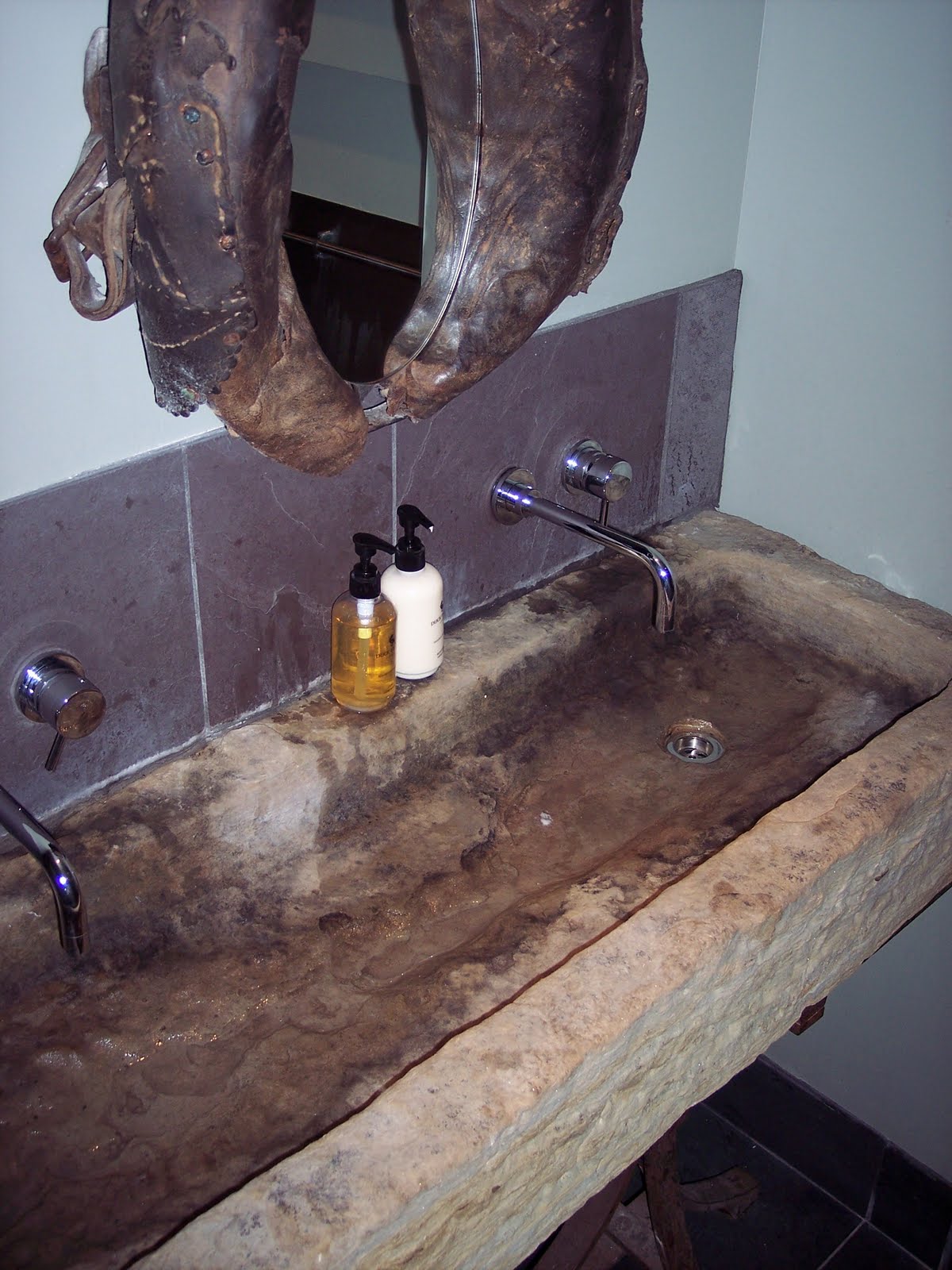
The Crown at Wells has long been a firm favourite and so we wanted to check out the newly acquired and refurbished Ship Inn, at Brancaster, part of the same chain. This too was excellent, warm and friendly with just the right amount of quirk. It also had quite the best sink in the gents' loo I've ever seen - a solid slab of stone that had a trough carved out of it. The tap at one end released a stream of water that ran along the length to the plug at at the other, like a very small, slightly soapy stream.

And the rooms are called 'cabins', how wonderful is that? One could spend the entire stay talking like a pirate, ordering grog and making numerous references to the 'poop deck'.

Labels: , ,

Thursday, April 01, 2010

Postcard from Ireland - Cork to Glengarriff


Taking the N71 from Cork to Glengarriff; a word about Irish main roads. One of the most charming things about them, as they twist and turn along the wild Atlantic coast or wind through beautiful countryside (FACT: Ireland contains over 90% of the world’s twists) is that they will suddenly plunge straight through a wee village. You’ll be happily hammering along with only bemused sheep there to witness your speedy progress and the next thing you know you are in a street rather narrower than an anorexic’s belt (usually with cars parked on either side of the street) and pondering the possibility of shopping for a newspaper simply by extending your arm out of the car window, into the newsagent next to you.

To get to the Drombeg stone circle, one of the most famous tourist attractions in the area, you turn off a road, turn off the side road and, just when you’re starting to wonder whether or not you’re actually on a goat trail, you enter the car park.

Walk past the tiny model circle of stones that some wag has put in a nearby field, along a twist in the path and there, emerging from behind the hawthorn hedge, is the stone circle and, behind that, the Atlantic.

This is no henge, so don’t expect something on the scale of Stonehenge or Avebury, but it’s impressive. You can walk around it, touch the stones and take a moment to think.

Or leave an offering. People had – a few coins and a flower (a daffodil, the flower currently in season and, perhaps more importantly, the flower of the Marie Curie cancer charity in the UK and also the leading cancer charity in Ireland) or, on one of the uprights, a mound of coppers in a sea shell placed on top of the stone.

Looking round, you can see why the circle was raised here. Circles are raised in sacred places, they do not make the place sacred. With the hills embracing the field and the Atlantic stretching to infinity, this is a special place.

Knowing how seriously the Irish take their food, it comes as no surprise to learn that next to the stone circle is a Neolithic kitchen. There are two rock lined pits in the earth; one for fire, the other for water. Sudies showed that hot rocks from the fire depositied in the pool of water could raise the temperature to boiling in eight minutes, and it would stay hot for three hours. If this is true then it shows that the priorities in neolitic times were boiling meat; the lack of a soap dish shows that this was a kitchen rather than a bath. So, Neolithic Cork man was well fed with hot food, but smelly.

Glengarriff is a small village running either side of the main road, like many other little villages. The only thing different about this one was that it had our hotel in it. Like otrher irish hotels, this comes with a pub attached to it (that’s right, sod the hotel bar, why have one of thjose when you can have an entire pub?). This was the second pub I happened across a breast feeding mother in. Nursing her three and a half month old baby the lady and I had a brief conversation, while I practiced the art of looking anywhere but at junior and resisted making some quip about draught versus bottled.

Thirty twisty turny minutes away is Castletownbere, a fishing village with a particular claim to fame. There are, I learned, very very many pubs called McCarthy’s bar in this part of Ireland. But this is THE McCarthy’s bar that adorns the front of the book of the same name by the late Pete McCarthy. After walking through the town and trying to wrestle with the apparent defiance of logic that suggested there were more pubs in the town than there was actual town, I ended up in McCarthy’s bar. It is, indeed, a grocers at the front and a bar at the back (actually it’s more like two thirds bar) and it is, without doubt, one of the most charming places to drink I’ve ever been. There must be something about a pub with a literary connection – the Woody Creek Tavern in Aspen is the same, it has a certain quality; maybe it’s the relaxed bar staff, maybe it’s the slightly shabby furniture or maybe it’s the beer (it’s the beer), but the place was fantastic.

It also served, without doubt, the best Guinness in Ireland.

Labels: , , , , , , , , , , , , , , ,

Tuesday, March 30, 2010

Postcard from Ireland - Cobh and Kinsale


The Irish are supposed to take their drinking seriously. They do, I’m sure, but that’s as nothing compared to how seriously they take their food.

Cork has a food market called ‘the English market’. It’s made up of various stalls selling everything from soup to nuts and, to put it in context; the fish counter is sixty feet long and that doesn’t include the lobster tank at one end and the portable oyster bed at the other. There was very little that I didn’t want to buy but, I suppose, fruit has its place (which is adorning the side of a cocktail).

In the end, in seeking a picnic lunch, I purchased what appeared to be a loaf sawn in half and stuffed with enough cheese and meat to feed a regiment but was, I was reassured, just a sandwich. I managed to get the thing loaded in the car without assistance, although I was wondering if assistance might be required in eating it. The sandwich counter at the English Market manages to combine artisan sandwiches manufactured on an industrial scale.

Cobh is famous for being the last port of call of the Titanic. It’s also famous for being the place that many of the emigrants from Ireland left their home country, driven by the lack of potatoes to seek a new life, and a tan, in the United States. So, obviously a place that is associated with tragedy and grinding misery is a must see on the tourist trail.

And for many, it is the beginning of the Irish tourist trail. Because the reason that the Titanic anchored off Cobh was that it provides excellent deep sea anchorage for ocean liners or, today, cruise ships. I wonder if they play up the Titanic connection to those who still have some sailing to do on their ‘Europe in two weeks’ package.

Cobh was also the first time I saw an image on a tourist guide book brought to life; the houses are all painted different colours. Not unusual you might think but an unusual effect when it’s a row of terrace houses and every house is a different, vibrant, colour. The Irish, it would appear, do not go in for ‘blush of pea’ or ‘murmur of straw’. No, it’s green green, yellow and the red normally found on post boxes or the lips of a certain type of hooker.

The overall effect is charming, even on a grey day. Maybe the houses are a colourful revolt to the predominant weather front of the Atlantic, where nature has a colour scheme of ‘grey with a hint of damp’. Of course, when the sun shines the place is transformed, the sky turns a dazzling blue and the houses resemble a giant painter’s pallet.

Cobh is also where you take the Cobh to Monkstown ferry (five Euros for a car), cutting out a lot of tedious driving around roads in a landscape that would delight industrial historians and is beloved of those that like to see thriving industry but is not as appreciated by those that like to see their landscapes unblighted by, for instance, steam plumes, spoil piles, ugly warehouses, cranes, more warehouses, docks and yet more warehouses.

Catching a ferry is a very holiday thing to do. In normal life, one very rarely feels the desire to catch a ferry, incompatible as they are with any city without a river running through it. However, if global warming really catches on, we may all be catching the ferry to work. So catching the Cobh to Monkstown ferry was great fun and something special…so I thought right up until the moment I realised that my car was just one in a line that had arrived to make the short (two minutes) trip across the river. To the others on the ferry this was no doubt just another crossing but to me, seeing the waves slosh and froth through the raised ramp in a ‘should that really be happening?’ sort of way, it was all very jolly.

I was so happy to be travelling on a ferry (really, they ought to have one of those funfair wooden signs on the boarding ramp, showing a middle aged bloke in a suit, with moustache and a wife-and-kids-and-mortgage hangdog expression and a notice saying ‘you must be at least this mature to ride on this ferry’) that I forgot the problems that previous Cobh maritime departures have had. Luckily, I can report that the trip was Iceberg, Kate and Leo free.

I was also mature enough to sit in the car and not demand to see the engine room or to pilot the ferry in by pretending that it was my birthday. In truth, getting the car off of the ramp was challenge enough and I think the ‘woo-hoo!’ I uttered was entirely justified.

I do though have to consider whether or not I have an issue with the Sat Nav directing one onto a ferry. I thought the whole idea of a car was to be in charge of ones own destiny, and go by road. It was quite a novelty though to hear ‘next left, next right, next left, onto ferry’.

On to Kinsale via roads straight out of ‘Return to Glennascaul’. Kinsale is, I strongly suspect, very different in August than it is in March. Ireland in March is much as you would expect. The rain is cold but, hey, the people are warm and that’s what we’re here for. Seeing the Irish countryside obscured by a soft rain and the spectre of the sun trying to break through the clouds, highlighting the daffodils with the promise of spring is enough to lift the heart, and remind one why Ireland has a reputation for being green.

Labels: , , , , , , , , , ,

Monday, March 29, 2010

Postcard from Ireland - Cork


Cork is a mobius place. The city itself is small, but by the clever application of a one-way system the city-planners have managed to wrap at least twelve thousand miles of road around what is essentially a small port.

Cork has some interesting features. For instance, if you’re asked in a pub quiz where the greatest number of coffee shops per person is, then forget Naples, New York or anywhere obviously peppy and suggest Cork. The only rational explanation to the very great number of coffee shops in Cork is that the national social health system can’t afford methadone and so everyone is combating hard drugs by downing double shots of espresso in various forms.

I’m not kidding. Everyone is drinking coffee, all the time. Possibly this is to give them the energy to get them to the next coffee shop and score their next hit of the dark gorgeousness. Given that many of the coffee shops double as chocolate shops, this is a good reason to sprint to the next one. Frankly, I can’t get excited about latte but give me a free chocolate truffle at the same time and I feel so good I want to have a dog tail grafted to my ass so that I can wag it and show my appreciation.

One citizen of Cork not drinking coffee was the baby being breast fed in a pub. That’s right, I was in Ireland for about an hour before I saw what has to be the ultimate in underage drinking. Actually, it sort of made sense. Cork has pubs everywhere and they are usually of a type: quiet, made gloomy by all the dark wood and dully shining brass and Guinness and affording many places where you can have a quiet pint, or a conversation, or unfetter your boob and feed junior. Much better than having to do it in a more public place.

One of the odd things about Cork (as soon as you accept breast feeding in pubs as normal, you realise your whole yardstick for what’s odd and what’s not in Ireland has to shift) is one of the main streets comes equipped with these green lights recessed into poles. What the hell is that all about? I could only assume that the city council have imported the maritime idea of giving guidance and they produce a handy marker for those who are weaving their way from bar to bar, pub to pub, on a dark and rainy night. Or if they are a bit pished.


One thing that becomes quickly apparent is just how seriously food is taken in Cork. The main food market ‘the English Market’ is home to the longest fish counter I have ever seen. Never mind that some of the fish looked spectacularly ugly, I was too distracted by the lobster tank at one end and the portable oyster bed at the other.

Taking food seriously, having a passion for it is, I think, linked to the famine in Ireland all those years ago. Not having enough food does rather concentrate the mind and, once the immediate threat is averted it’s natural enough to carry on thinking about food – not just ‘where can I get a potato’ but ‘I wonder what interesting things I can do with garlic and seafood today’. I think the collective historical memory of the famine may also go some way towards explaining the portion sizes. When you don’t know where your next meal is coming from, you make sure that the current one involves piling the plate high.

Labels: , , , , , , , , ,